

Let's be honest: breaking into the Frisco market is tough right now. With home prices reflecting the area's massive popularity, the biggest hurdle for most buyers isn't the monthly payment—it

Dated: January 23 2026
Views: 159
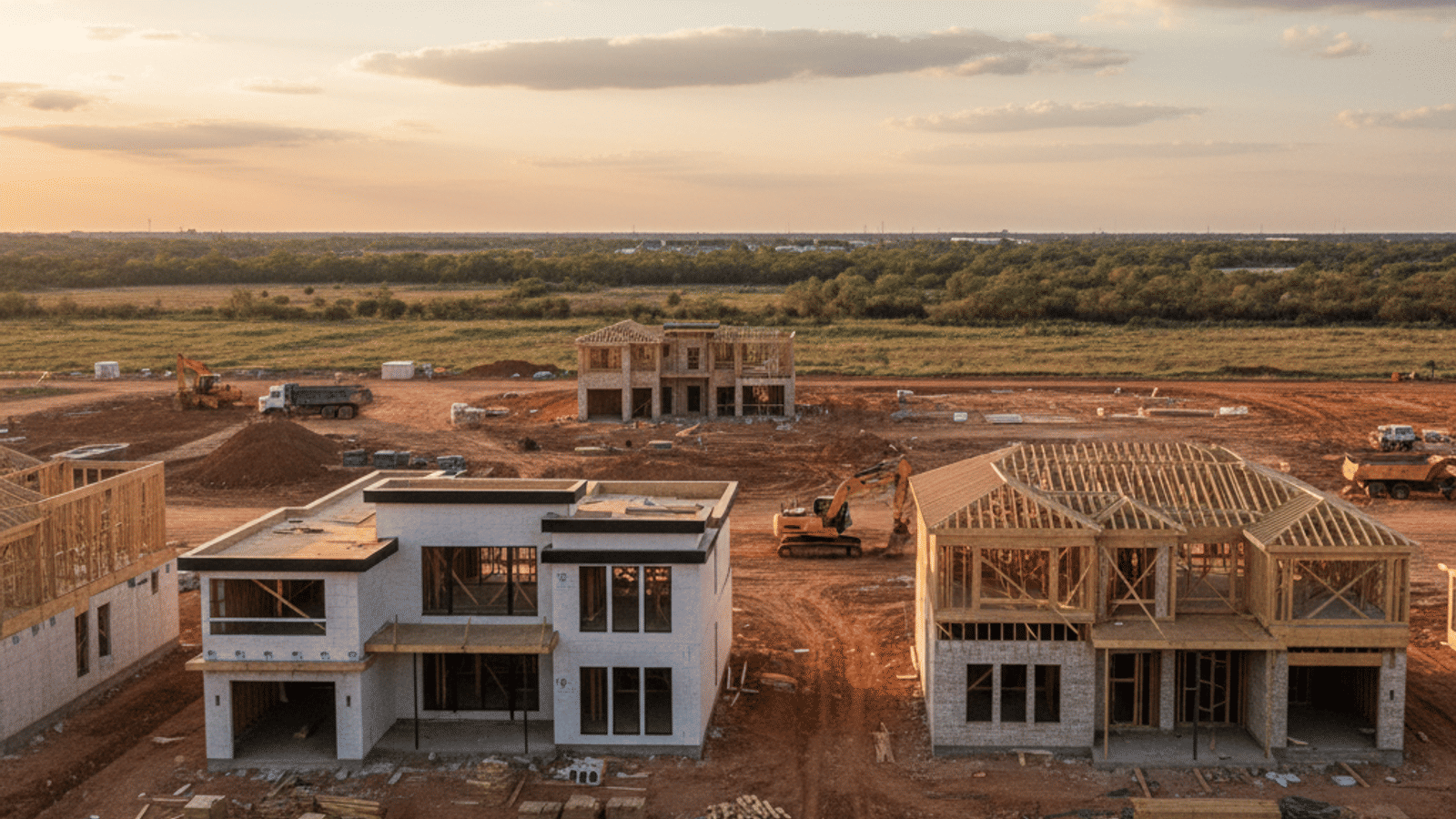
If you have driven north along the Dallas North Tollway recently, you have likely noticed that the landscape is changing fast. What used to be open fields a decade ago is now home to some of the most ambitious real estate projects in the country. Frisco has transitioned from a quiet bedroom community into a major economic hub, and the housing market reflects that shift.
We are seeing a move from the "affordable suburb" reputation of the early 2000s to a true luxury destination. With corporate headquarters like the Dallas Cowboys at The Star and the massive new PGA Frisco headquarters taking root, home values and expectations have risen. Today, buyers relocating to North Texas are looking for more than just a house; they are looking for master-planned lifestyles.
The "Four Corners" area - where Frisco, Allen, Plano, and McKinney meet - remains a hotspot, but the real energy is pushing north. If you are looking to build, understanding the lay of the land, the price points, and the distinct "vibe" of each community is critical before you sign a contract.
There are dozens of pockets of new construction popping up, but three master-planned communities are currently dominating the conversation. Each offers a completely different lifestyle, price point, and long-term value proposition.
If you have heard buzz about a "city within a city," this is it. Fields is a massive 2,500-acre development that anchors the northern sector of Frisco. It is not just about homes; it is built around the new PGA of America headquarters and the Omni Resort. The vision here is luxury mixed with high-end urban living.
Because the development is so large, it is broken into distinct neighborhoods (villages), ranging from the $500s for townhomes to well over $2M for custom estates. The draw here is the "cool factor" and appreciation potential. You are buying into the premier address of the next decade. Residents here generally zone to the highly coveted Panther Creek High School, which is a major draw for education-focused buyers.
The Grove offers a very different feel compared to the sprawling nature of Fields. It is known for its "urban village" vibe. The developers intentionally preserved mature trees and created winding streets to avoid that "concrete jungle" feel often associated with new builds. The focus here is on connection—there is a popular coffee shop right in the community, and the amenity center is top-tier.
Price points here usually run from the mid-$700s up to $1.5M+. One of the biggest financial perks of The Grove is its tax structure. Unlike many new developments that carry heavy infrastructure taxes, The Grove has a lower total tax rate compared to its competitors, often saving residents thousands per year. It sits in a sweet spot for those wanting a community feel while remaining close to the Four Corners.
Lexington is currently the largest development in the heart of Frisco. While Fields is further north and The Grove is more boutique, Lexington offers a diverse range of options right in the center of the action. It is a massive community offering everything from smaller 40-foot lots to expansive 70-foot estate lots for those who want to build from scratch.
This community appeals to buyers who want quick access to established retail—you are minutes from grocery stores and the tollway. Prices here generally range from the $600s to $1.8M depending on the builder and lot size. The HOA fees are robust, typically falling between $1,500 and $2,100 annually, but they cover significant amenities including a high-end clubhouse and fitness center.
When looking at new home developments in Frisco TX, the list price is only half the story. You have to look at the monthly carry, and in Texas, property taxes are the biggest variable. It is common for buyers to be shocked when two homes at the same price point have monthly payments that differ by $400 or $500 purely due to tax rates.
In many new construction areas, developers use Municipal Utility Districts (MUDs) or Public Improvement Districts (PIDs) to pay for infrastructure like roads and sewage. This adds an extra layer of tax on top of the standard rates. In some aggressive growth areas, a MUD or PID can add 0.5% to 1.0% to your annual tax bill.
However, Frisco has some unique "No MUD" advantages. Communities like The Grove and specific sections of Fields and Lexington are marketed with total tax rates hovering around 1.69% to 1.8%. Contrast that with a brand new community in a heavy MUD district where the rate might exceed 2.2% or even 2.5%, and you can see why checking the tax certificate is vital.
To give you a rough idea of the math, a standard tax bill is composed of three main buckets:
City of Frisco: ~0.43%
Frisco ISD: ~1.02%
Collin/Denton County: ~0.15%
When you add those up, you get a base of around 1.6%. If you are in a community with a heavy MUD, you stack another percentage point on top. If you are in a "clean" tax community, you stay close to that base.
Don't forget the Homeowners Association dues. In these master-planned communities, you are paying for lifestyle. Dues generally range from $120/mo to over $250/mo depending on if the community has gate guards, front yard maintenance, or elaborate clubhouses.
People aren't just moving here for the tax rates; they are moving for the lifestyle. Frisco has done a good job of balancing rapid growth with livability.
Frisco ISD is famous for its "small school model." Rather than building massive high schools with 5,000 students like neighboring districts, Frisco caps high schools at smaller numbers and simply builds more of them. This allows for better student engagement and more opportunities for students to make the varsity team or lead a club. Ratings are consistently "A" grade across the board.
Where you buy dictates your commute. If you choose Fields or the northern edge of Frisco (near the PGA), you are adding about 10 to 15 minutes to a commute to downtown Dallas compared to living in central Frisco near Lexington. However, with the expansion of the Dallas North Tollway, a typical commute to Dallas ranges from 25 to 40 minutes.
Living in Frisco puts you near premier entertainment districts. You have The Star (Cowboys HQ) for dining and nightlife, Legacy West just to the south for high-end shopping, and the emerging PGA district for golf and resort-style entertainment.
If you are relocating to North Texas, you are probably cross-shopping Frisco with its neighbors. Here is how they stack up.
Frisco vs. Prosper This is the most common dilemma. Prosper is directly north of Frisco.
Prosper: Offers a "country estate" feel. You will find larger lots (often quarter-acre or more) and a quieter atmosphere. The average price point is high ($800K+), but you get more dirt for your money.
Frisco: Offers more commercial amenities, shorter commutes, and a more suburban/urban blend. Frisco is better if you want to be five minutes from a Target or a luxury steakhouse.
Frisco vs. Plano Plano is located just south of Frisco and is effectively "built out."
Plano: You buy here for established neighborhoods, massive mature trees, and generally no HOA. The schools are excellent, but you are buying a resale home that likely needs renovation.
Frisco: You buy here for "brand new." You get modern floor plans, energy efficiency, and resort-style community pools, but you will contend with smaller lots and active HOAs. Furthermore, while many choose to buy, those waiting to build from scratch should note that the average rent in Frisco TX as of early 2026 is approximately $1,480 for a one-bedroom apartment and around $2,900 for a single-family home.
Frisco vs. McKinney
McKinney: Known for its historic downtown square and charm. It can be more affordable than Frisco, but the commute to Dallas is often tougher due to reliance on Highway 75.
Frisco: Offers higher appreciation potential in the luxury sector and better proximity to the tollway for easy travel.
Buying a new build is different from buying a resale home. The process is longer, and the contracts are heavily weighted in the builder's favor.
Representation is Key The friendly sales agent in the model home represents the builder, not you. Their job is to protect the builder's bottom line. It costs you nothing to have a buyer's agent represent you, and they can often negotiate things like closing costs or design center credits that an unrepresented buyer might miss.
The "Base Price" Illusion When you see a sign that says "Homes from the $700s," assume the final price will be at least 10% to 15% higher. This is because the base price usually includes standard finishes. Once you visit the Design Center to add hardwood floors, quartz countertops, and structural options, the price jumps significantly.
Managing Demand In hot communities like Fields, builders often utilize waitlists or lot drawings. You may not be able to just walk in and pick a lot. Being pre-approved with the builder's preferred lender is often a requirement just to get on the list for a lot release.
It depends entirely on the specific community. While MUD taxes are very common in Texas new construction, major Frisco communities like The Grove and parts of Fields have minimal or no MUD tax. This can keep the total tax rate closer to 1.8% rather than the 2.2% or higher seen in developments with heavy infrastructure debt.
This usually comes down to lot size versus convenience. Prosper offers larger lots and a quieter, more residential feel, making it popular for luxury buyers wanting space. Frisco offers better proximity to dining, shopping, and major highways, which is preferred by those who want a shorter commute and urban amenities.
The tax rate varies by neighborhood, but you should budget for a range between 1.7% and 2.5%. The base rate including City, School, and County taxes is usually around 1.6% to 1.7%, but if you buy in a community with a MUD or PID, that total effective rate will jump higher.
Let's be honest: breaking into the Frisco market is tough right now. With home prices reflecting the area's massive popularity, the biggest hurdle for most buyers isn't the monthly payment—it
Having grown from a sleepy bedroom community to one of the most exciting cities in the nation, the name Frisco is synonymous with excitement. Major projects like The Star, the new PGA headquarters
Let’s be honest: trying to buy your first home in Frisco isn't what it used to be. Ten or fifteen years ago, this was a quiet suburb with abundant affordable land. Today, it is one of the most
Let's be real for a moment: buying a home in Frisco isn't exactly cheap right now. With median home prices hovering around $652,000, looking at the monthly mortgage numbers can feel a bit daunting,
 © 2026 North Texas Real Estate Information Systems, Inc. All rights reserved. Disclaimer: All information deemed reliable but not guaranteed and should be independently verified. All properties are subject to prior sale, change or withdrawal. Neither listing broker(s) nor Weichert, Realtors® - Property Partners - Frisco shall be responsible for any typographical errors, misinformation, misprints and shall be held totally harmless. The database information herein is provided from and copyrighted
by the North Texas Real Estate Information Systems, Inc. NTREIS data may not be reproduced or redistributed and is only for people viewing this site. All information provided is deemed reliable but is not guaranteed and should be independently verified. The advertisements herein are merely indications to bid and are not offers to sell which may be accepted. All properties are subject to prior sale or withdrawal. All rights are reserved by copyright.
Data last updated: September 14, 2026 8:59 PM UTC
Show More...
© 2026 North Texas Real Estate Information Systems, Inc. All rights reserved. Disclaimer: All information deemed reliable but not guaranteed and should be independently verified. All properties are subject to prior sale, change or withdrawal. Neither listing broker(s) nor Weichert, Realtors® - Property Partners - Frisco shall be responsible for any typographical errors, misinformation, misprints and shall be held totally harmless. The database information herein is provided from and copyrighted
by the North Texas Real Estate Information Systems, Inc. NTREIS data may not be reproduced or redistributed and is only for people viewing this site. All information provided is deemed reliable but is not guaranteed and should be independently verified. The advertisements herein are merely indications to bid and are not offers to sell which may be accepted. All properties are subject to prior sale or withdrawal. All rights are reserved by copyright.
Data last updated: September 14, 2026 8:59 PM UTC
Show More...
